The “Big Box” Burden on Cities
-
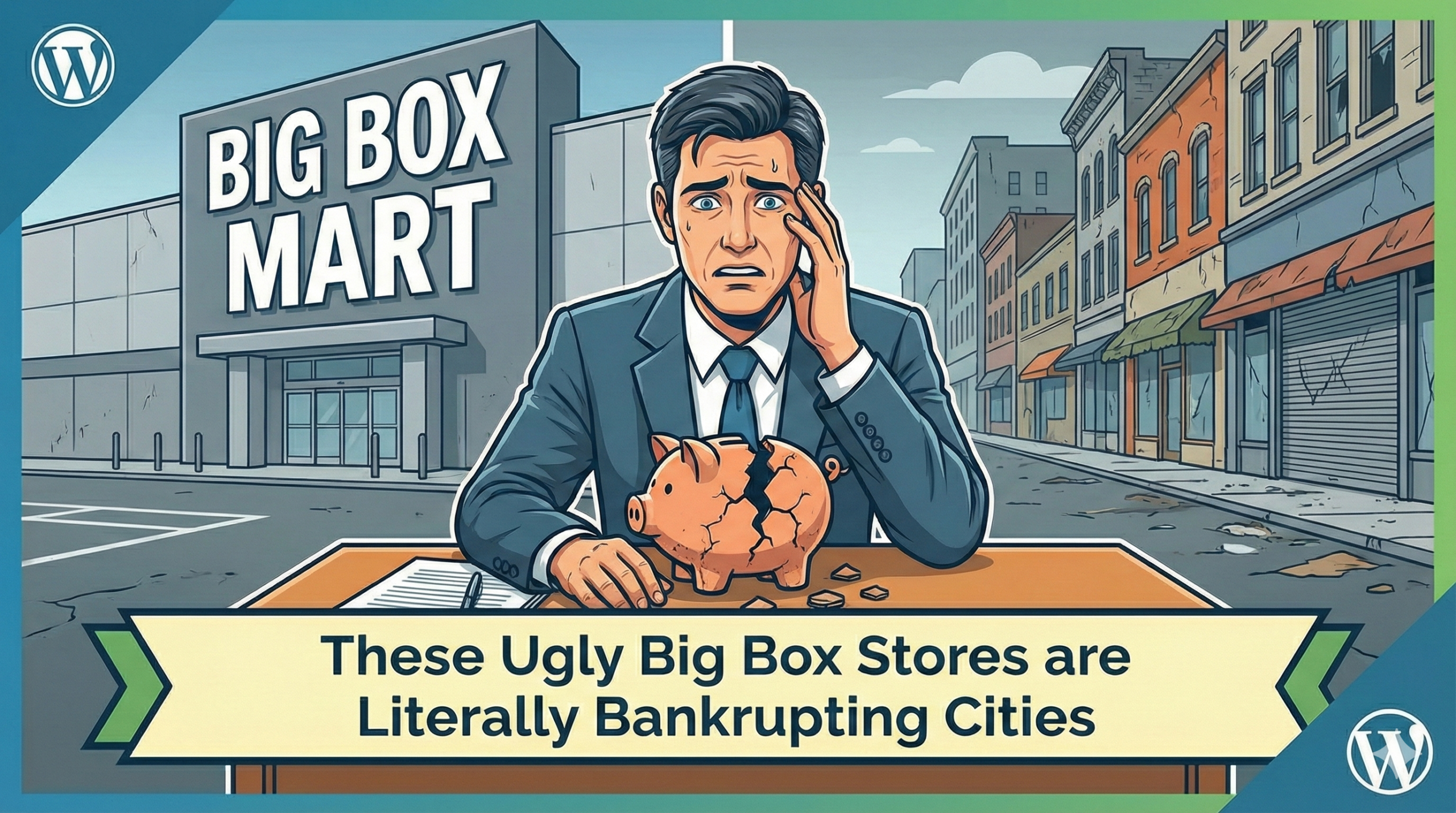
Infrastructure Costs vs. Tax Revenue: Big box stores are usually built on the edge of cities (greenfield locations), requiring massive amounts of new infrastructure (roads, sewage, pipes) to support them.
-
The Math: Urban3’s research in Asheville, NC, found that a mixed-use downtown building generates nearly 100 times more property tax revenue per acre than a suburban Walmart.
-
Net Loss: A study in Ohio estimated that a store like Walmart produced a net annual loss of $0.44 per square foot for the city. For a small 50,000 sq ft store, that’s a loss of over $20,000 a year.
-
-
The “Dark Store Theory”: Retailers like Lowe’s, Target, and Costco use legal loopholes to lower their property taxes. They argue their buildings are so specific and cheaply made that they are functionally “worthless” if the specific retailer leaves, so they should be assessed as vacant (“dark”) properties even while operating.
Destruction of Local Economies
-
Wealth Extraction: When you spend $100 at a local business, $48 stays in the community. At a big box store, only $14 stays.
-
Reason: Local businesses use local accountants, banks, and suppliers. Big box stores send revenue immediately to corporate HQs (e.g., Bentonville, Arkansas) and use centralized services.
-
-
Job Destruction: Five years after a Walmart enters a county, total employment falls by about 3%. They destroy more local jobs than they create.
-
The SNAP Cycle: Walmart pays employees so little that many qualify for food stamps (SNAP). Walmart then captures over 25% of all SNAP dollars spent, effectively profiting from the government subsidies required to support their own underpaid workforce.
Why Cities Do It (The Ponzi Scheme)
-
Short-Term Gain: Cash-strapped cities approve these developments for the immediate injection of sales tax revenue and “growth” stats to pay off debts from previous infrastructure projects.
-
Long-Term Liability: The maintenance costs for the new roads and pipes don’t hit the city budget for decades. By then, the big box store (built to last only ~15 years) may have already closed, leaving the city with the bill and a vacant building.
The European “Hypermarket” Comparison
-
Regulation: European countries often ban “loss leaders” (selling below cost to kill competition) and have strict laws about where hypermarkets can be built.
-
Walmart in Germany: Walmart failed in Germany because it couldn’t exploit labor (unions are strong), couldn’t use predatory pricing, and the culture rejected the “creepy” forced smiling and chanting.
-
Shopping Culture: Europeans generally prefer walkable city centers with specialty shops over driving to a one-stop box on the outskirts.
Proposed Solutions
-
Import Replacement: Cities should prioritize businesses that keep money circulating locally.
-
End Subsidies: Stop giving an estimated $65 billion annually in subsidies to attract big box retailers.
-
Revitalize Downtowns: Focus spending on maintaining dense, walkable areas that are financially productive rather than subsidizing suburban sprawl.