1. Aldi: The Efficiency of “No Frills”
-
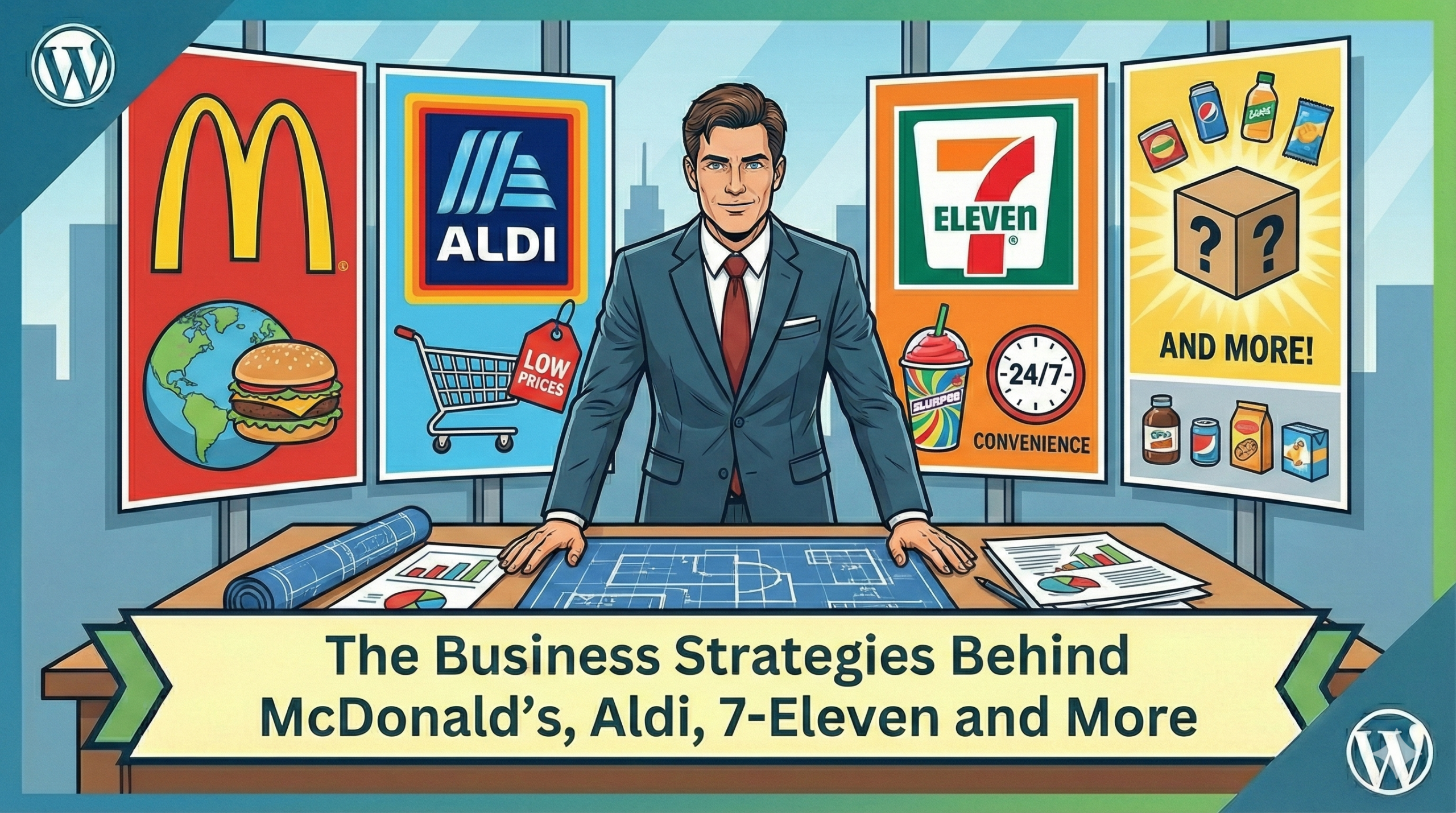
Strategy: Aldi keeps prices lower than national averages (e.g., milk for $2.18 vs competitors) through extreme operational efficiency.
-
Store Layout: Stores are small (~12,000 sq ft) with only 3–5 employees on the floor. Products are displayed in their shipping boxes to save stocking time.
-
Inventory: They stock only ~1,600 items (vs. ~31,000 in typical supermarkets). 90% of stock is private label (e.g., “Thin Wheat” instead of “Wheat Thins”), which allows them to bypass brand markups.
-
Psychology: The “cheap” look is intentional; it signals to customers that the savings are due to efficiency, not low quality.
2. Meal Kit Companies (HelloFresh, Blue Apron)
-
The Problem: High customer churn. About 90% of new customers cancel subscriptions within the first year.
-
Economics: Customer acquisition is expensive. Companies often spend months earning back the marketing dollars spent to acquire a single user.
-
The Pivot: To improve retention and convenience, companies are shifting toward pre-made meals (e.g., Factor, Methodology) rather than kits that require cooking, as Americans only cook ~4.5 meals at home per week.
3. Sweetgreen: The Salad Supply Chain
-
Financials: Despite high revenue ($6B valuation at peak), the company struggles with profitability due to high overhead costs. It sources directly from farmers rather than cheap distributors, which is expensive.
-
Strategy: Positioning itself as a tech company. They are rolling out the “Infinite Kitchen”—a robotic assembly line that increases throughput and reduces labor needs by ~33%.
-
Expansion: shifting from urban centers to suburbs and introducing loyalty programs (“Sweet Pass”) to create habitual customers.
4. Shake Shack: Fast Casual vs. Fast Food
-
The Tension: Trying to balance “cooked-to-order” quality with the speed expected of fast food.
-
Drive-Thrus: Historically a walk-in city brand, Shake Shack is aggressively building drive-thrus to compete with McDonald’s. Drive-thrus are more profitable but require faster service (6-8 mins vs. industry standard of 4-7 mins).
-
Efficiency: Implementing kitchen changes like using pre-cut lettuce to save prep time and focusing on “upstream ordering” (taking orders via tablet in line).
5. Cava: The “Mediterranean Chipotle”
-
Growth Strategy: Cava grew rapidly by acquiring a failing competitor, Zoe’s Kitchen, and converting its 250+ locations into Cava stores. This was faster and cheaper than building from scratch.
-
Data-Driven: They use heat-mapping and mobile analytics to determine exactly where to open new stores based on customer demographics.
-
Challenge: Now that they have converted all Zoe’s locations, they must prove they can grow organically by building new sites in a saturated market.
6. 7-Eleven: American vs. Japanese Model
-
Ownership: The US chain is owned by the Japanese company Seven & i Holdings. The Japanese parent company is forcing the US stores to modernize.
-
Tanpin Kanri (Item-by-Item Management): The Japanese strategy relies on granular data to stock fresh food delivered multiple times a day. US stores historically received only two deliveries a week.
-
Food Focus: With cigarette and gas sales declining, 7-Eleven is pivoting to fresh food (Ramen, localized snacks) and delivery, using regional commissaries to improve quality.
7. Liquid Death: Marketing Over Product
-
Concept: A water brand that markets itself like a beer or energy drink (“punk rock” aesthetic).
-
Philosophy: The CEO admits there is “nothing incredibly different” about the water itself; the value is entirely in the branding and “counterculture” appeal.
-
Expansion: To sustain a $1.4B valuation, they are expanding beyond plain water into high-margin flavored sparkling water and iced teas (Death Dust), which now make up the majority of sales.
8. Athletic Brewing: Non-Alcoholic Craft Beer
-
Market Gap: Identified that 80% of non-alcoholic beer buyers also drink alcohol—they just want options for when they can’t get drunk (lunch, post-workout).
-
Process: Unlike competitors who boil alcohol out of normal beer (ruining the taste), Athletic developed a 10-12 step brewing process to create non-alcoholic beer from the start.
-
Distribution: Because it’s non-alcoholic, they can sell in places beer can’t go: coffee shops, convenience stores, and gyms.
9. McDonald’s International: Localization
-
Strategy: About 60% of McDonald’s sales come from outside the US. They succeed by adapting menus to local cultures (e.g., no beef in India, serving the “Maharaja Mac” with mutton/chicken instead).
-
Innovation: Many global hits started as local experiments. The McFlurry began in Canada, and the McSpicy started in China before going global.
-
Streamlining: While localization is key, the CEO notes there are too many redundancies (e.g., 70 different chicken sandwiches globally) and plans to streamline the core menu.
I did business with Mitsui/7 eleven for many years. They went from a valuable real estate model that placed them in areas of expendable income and diverse product consumption to a stagnate real estate model due to holding on to stores for way to long and then being stuck with them in areas with poor expendable income. The Japanese want 7 elevens to be like the ones in Japan with $100 bento boxes. They want 7 eleven to be the number one home meal replacement entity. Their existing stores are more likely to live off of beer, cheap wine, cigarettes, junk food, and skin mags.
Every executive I met with who actually had a good idea on leveraging logistic routes, minimum orders, and store locations all ended up leaving within 2 years. Their logistics are incredibly inefficient, ordering cycles are chaotic, and the management team keeps pushing for high end product sales while bleeding away millions in low performing stores, distribution, and inventory. You can be a high end convenience store or a low end junk and booze store but you can’t be both.
From a strategy point this is old. If you take levers too they do well in economic downturns relative to specialists like p&g or colgate. So in effect they are slicing the market perception during downturns which is exactly the point – price. If this works in economic upturns then the sales will maintain and we can say perception has finally changed against the premium brands. Until such time it doesn’t work for economic upturns as consumers will move to premium products.